Introduction
Last time I posted, I said I would say more about the Kepler and James Webb Space Telescopes, so here I go. When I began writing science fiction, I looked for solar systems and planets that could fit the stories I had in mind. The data that helped me most came from the Kepler Space Telescope, launched in 2009. What started as scientific research soon became the foundation for worlds in my Records of the Argos series.
How Kepler’s Discoveries Fueled My Fiction
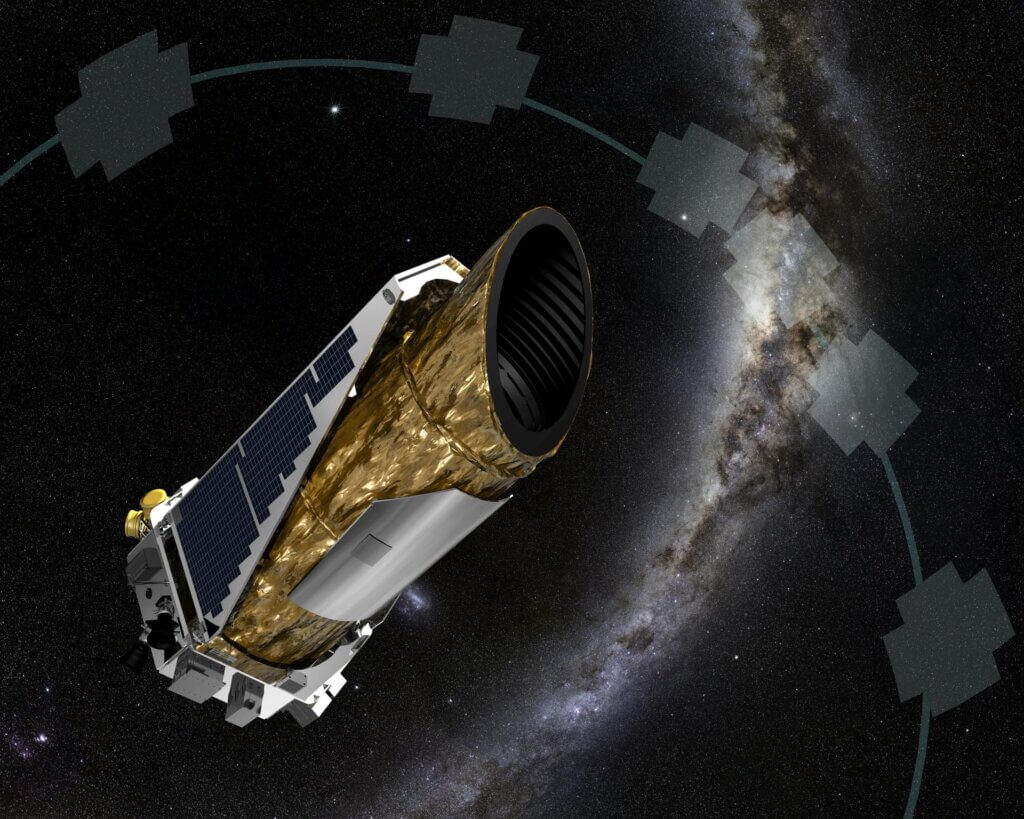
At first, I knew little about Kepler — only that it had identified more than 2,600 exoplanets across about 2,000 solar systems, with 600 of those containing multiple planets. For a writer, those numbers were a treasure chest of possibilities.
In Search for Help, Kepler’s discoveries led me to Proxima Centauri. More specifically, the target became Proxima b, a planet in the habitable zone only 4.25 light years from Earth, classified by the European Southern Observatory. That became the basis for Zarminia, the world my character Van Child set out to find.
In Insurrection, Book 3 of Records of the Argos, the crew of the Argos was swept into the Kepler-452 system, 1,400 light-years from Earth. The planet of interest there was Kepler-452b, which I reimagined as Brintal.
How Kepler Worked
Kepler never captured direct images of these planets. Instead, it used the transit method, measuring tiny dips in starlight when planets crossed in front of their stars. From those faint shadows, scientists could infer the size and orbit of a planet. Writers like me could then imagine its atmosphere, gravity, and potential for life.
Kepler gave us the big-picture statistics: the likelihood of Earth-like planets, the diversity of planetary systems, and hints about where humanity might look next. Sadly, the telescope was retired in 2018 after it ran out of fuel. If you want to know more, here is a 4-minute NASA brief
James Webb: Deeper Questions, Fewer Stories (So Far)
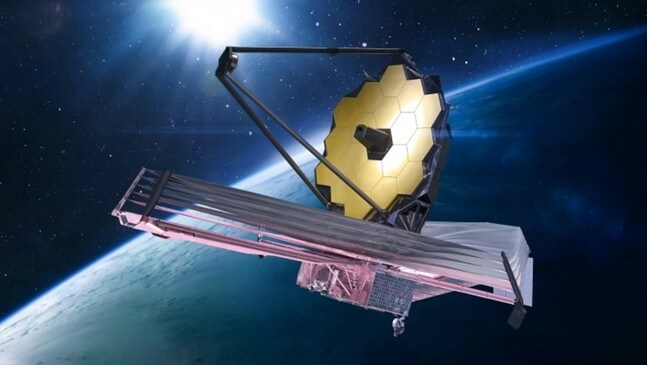
Then came the James Webb Space Telescope (JWST), launched in 2021. Unlike Kepler, Webb wasn’t built just to find planets. Instead, it explores the universe’s earliest light, the formation of stars and galaxies, and the detailed atmospheres of exoplanets.
Webb asks the deeper questions: What are these planets made of? Do they have water? Could they support life?
So far, I haven’t used Webb’s data much in my fiction — though its discoveries may yet inspire future books. For now, it remains a powerful scientific tool, while Kepler was the telescope that truly fueled my storytelling. For more detail, here is a 4 minute Webb NASA brief
Conclusion
For me as a writer, the Kepler Space Telescope had the greater impact. It gave me worlds like Zarminia and Brintal, inspired by real discoveries, but transformed into places where my stories could unfold.
The James Webb Space Telescope, though remarkable, has so far been more of a scientific marvel than a literary spark. Still, I know its insights may eventually find their way into my Records of the Argos series.
Which telescope do you think will inspire more science fiction stories — the pioneering Kepler or the visionary Webb?